
Walk through any grocery aisle or scroll any food headline this year and you may come across a not-so-subtle pattern. Kefir next to the oat milk. Kimchi and sauerkraut spilling out of the condiment section into their own display. Functional mushroom powders stirred into everything from coffee to chocolate. Fiber counts printed on cereal boxes like a badge of honor.
None of this is a coincidence. Gut health has become the defining health narrative of the year, and fiber is doing most of the heavy lifting behind it.
But really, none of this should feel new. Fiber might just be our favorite topic here on Plant-Powered Physicians, and it seems like food companies might just be starting to hop on the bandwagon.
The Gut Has Always Been the Point
“The microbiome responds to fiber. That is the key,” Dr. Eden English has said on the show, describing how a diverse, plant-rich diet feeds the trillions of microbes living in the gut, which in turn produce compounds that support metabolism and healing.
That relationship — plants feeding microbes, microbes protecting us — is the critical engine behind most of the health benefits associated with plant-forward eating.
However, variety matters as much as volume. Dr. English’s benchmark, “incorporating 30 different plant-based foods into your diet each week,” is not an arbitrary round number. Research from the American Gut Project found that people who ate more than 30 different plant types per week had measurably more diverse gut microbiomes than those who ate 10 or fewer (McDonald et al., 2018). Diversity on the plate becomes diversity in the gut, and that diversity is incredibly protective.
And this scale of payoff is well established. High-fiber eating patterns are associated with a 15 to 30% lower risk of death from all causes and from cardiovascular disease when comparing the highest fiber intakes to the lowest (Reynolds et al., 2019).
Fiber is not some niche nutrient. Rather, it may be the single most underrated lever in promoting health and wellbeing through your diet.
Why Fermented Foods are Having a Moment of Their Own
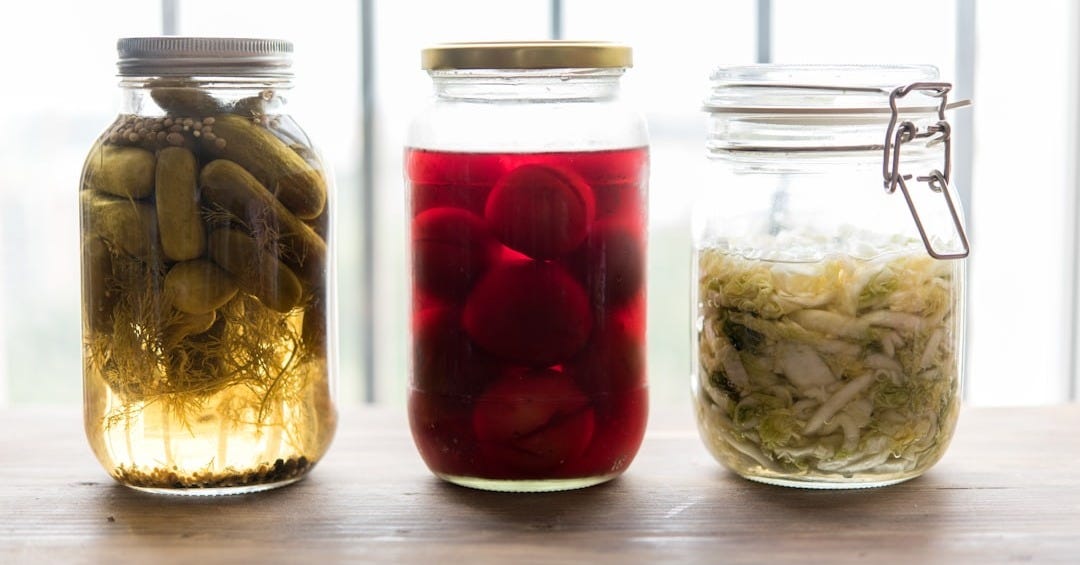
A widely cited Stanford study compared a high-fiber diet against a diet rich in fermented foods — things like kefir, kimchi, sauerkraut, miso, and yogurt — over 17 weeks.
The fermented-food group saw a measurable increase in overall microbial diversity along with a drop in 19 inflammatory proteins in the blood, including interleukin-6, which is a marker linked to conditions like rheumatoid arthritis and type 2 diabetes. The high-fiber group, by contrast, saw its microbiome diversity hold steady, with signs that many participants’ gut bacteria were not yet equipped to fully break down the added fiber (Wastyk et al., 2021).
The practical takeaway is not that fiber loses to fermentation, it is that they do different jobs. Fiber feeds the microbes you already have. Fermented foods can introduce new, beneficial strains and metabolites directly.
A gut that gets both — plenty of plant variety and a regular supply of live-culture foods — is better equipped than one relying on either alone. This is a case where the trend headlines and the underlying science are, refreshingly, telling a similar story.
And importantly, bringing this wisdom into planning a week of meals does not require some major diet overhaul. A spoonful of sauerkraut alongside a grain bowl, a small glass of kefir in a smoothie, kimchi folded into fried rice or piled onto a sandwich — these are small, repeatable additions that add up over time. This is all part of the same “progress, not perfection” philosophy we return to again and again here on Plant-Powered Physicians.
Functional Mushrooms, in Proportion
Mushrooms deserve a mention here too, if a more measured one. Mushrooms contain polysaccharides such as beta-glucans that appear to interact directly with the immune system. Emerging research describes these compounds as functioning like “biological response modifiers,” capable of activating immune cells and, in some species, dampening the inflammatory pathways involved in conditions like rheumatoid arthritis (Wang et al., 2025).
However, as always, it is important to think critically about the research and where this evidence stands. Much of it comes from early-phase trials and laboratory studies, with real limitations around small sample sizes and methodology across research groups.
Mushrooms are an extremely promising way to diversify a plant-forward plate — shiitake in a stir fry, cremini folded into a bolognese, maitake roasted until crisp — but they are best treated as yet another colorful, fiber-containing addition to the rotation rather than a stand-alone fix.
The Takeaway
What ties fiber, fermented foods, and mushrooms together is not a single miracle nutrient. Rather, the takeaway here is the importance of variety — feeding the gut a wide and rotating cast of plants and live cultures rather than leaning on any one food to do all the work.
That is a harder story to put on a headline than “this superfood fixes your gut,” but it is the one the evidence actually supports, and the one that we think is most important to share here on Plant-Powered Physicians.
Sources
McDonald, D., Hyde, E., Debelius, J. W., Morton, J. T., Gonzalez, A., Ackermann, G., . . . Knight, R. (2018). American Gut: An open platform for citizen science microbiome research. mSystems, 3(3), e00031-18. https://doi.org/10.1128/mSystems.00031-18
Reynolds, A., Mann, J., Cummings, J., Winter, N., Mete, E., & Te Morenga, L. (2019). Carbohydrate quality and human health: A series of systematic reviews and meta-analyses. The Lancet, 393(10170), 434–445. https://doi.org/10.1016/S0140-6736(18)31809-9
Wang, K., Wang, A., & Meade, B. (2025). Edible mushrooms as emerging biofactories for natural therapeutics and oral biopharmaceutical delivery. Frontiers in Fungal Biology, 6, 1742455. https://doi.org/10.3389/ffunb.2025.1742455
Wastyk, H. C., Fragiadakis, G. K., Perelman, D., Dahan, D., Merrill, B. D., Yu, F. B., . . . Sonnenburg, E. D. (2021). Gut-microbiota-targeted diets modulate human immune status. Cell, 184(16), 4137–4153. https://doi.org/10.1016/j.cell.2021.06.019
Want more like this? Check out the Plant-Powered Physicians Podcast for more tips, recipes, and evidence-based guidance to support your plant-forward journey.